Aeration & Overseeding in Hayden Idaho
Professional Lawn Care & Snow Plowing
Check Out Our Memberships!
A lawn can lose its density and vigor for several reasons. Repeated foot traffic can compact the soil, older turf can become thin, and worn areas may struggle to recover on their own. When the soil is compacted, grass roots have less access to the air and water they need, while sparse turf leaves more room for weeds and bare soil.
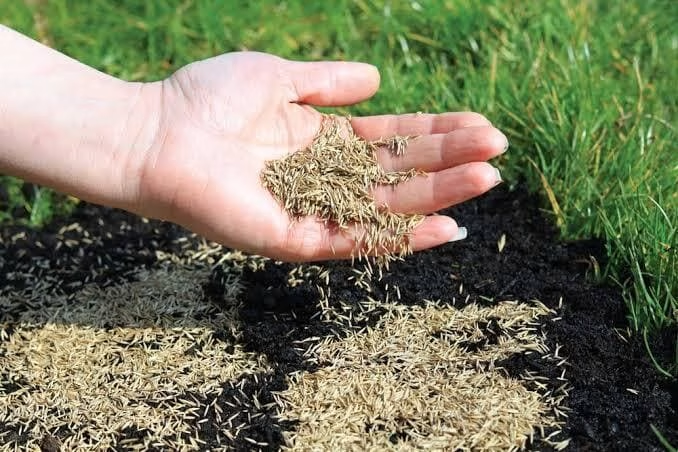
Aeration and overseeding in Hayden, Idaho can address these two conditions together. Core aeration opens compacted soil by removing small plugs, while overseeding introduces new grass seed into areas where the existing turf needs more density.
Endurance Lawn Care provides lawn improvement services for properties in Hayden and surrounding North Idaho communities, with treatments selected according to the condition of the individual lawn.
What Core Aeration Does
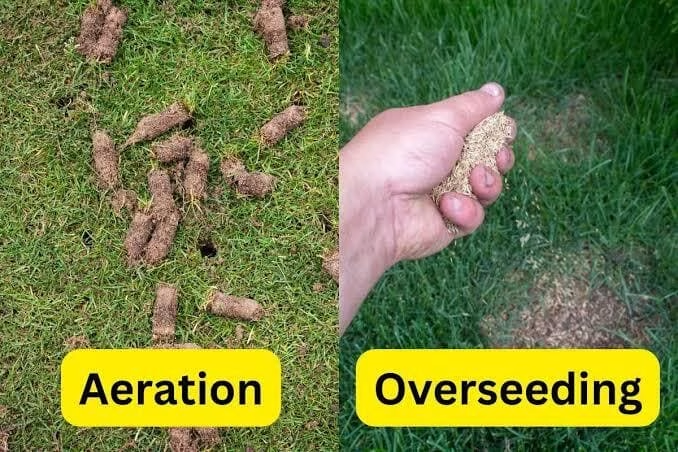
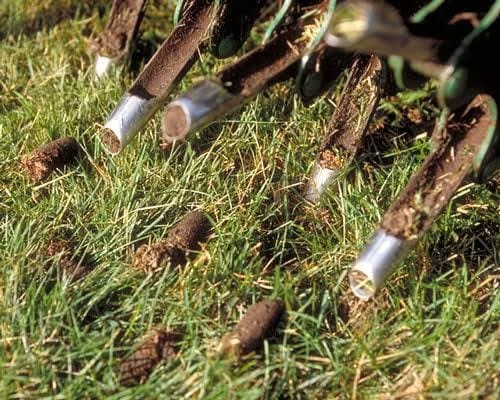
Core aeration is a mechanical process that removes small cores of soil from the lawn. The openings created in the soil can improve water infiltration and air movement while giving grass roots additional room to grow.
Compaction can develop gradually from lawn traffic, pets, outdoor activities, mowing equipment and certain soil conditions. A compacted lawn may show poor water infiltration or reduced turf growth even when the property is receiving regular maintenance.
University of Idaho Extension identifies core aeration as a useful practice for relieving compaction, improving air and water movement, and encouraging root growth.
Aeration may be worth considering when you notice:
- Hard or dense soil
- Water remaining on the surface after irrigation or rain
- Grass thinning in frequently used areas
- Uneven turf growth
- Poor recovery after heavy use
- Shallow root development
- Turf that struggles during periods of summer stress
Aeration is not a universal solution for every lawn problem, but it can improve growing conditions when compaction is limiting turf performance.
Why Pair Aeration With Overseeding?
Aeration and overseeding have different jobs.
Aeration works on the soil. Overseeding works on turf density.
If your lawn has lost grass plants over time, aeration alone will not replace them. Overseeding adds new seed to suitable thin areas so additional grass can establish alongside the existing turf.
Performing the two services together can make practical sense because aeration creates openings in the soil where seed can make better contact with the soil surface.
Overseeding may be useful for:
- Thin sections of otherwise healthy turf
- Small bare patches
- Worn areas near walkways or activity zones
- Turf damaged by seasonal stress
- Lawns that need greater grass density without complete replacement
The grass seed should also match the site. University of Idaho lists Kentucky bluegrass, perennial ryegrass, tall fescue and fine fescues among common cool-season turfgrasses used in Idaho, but these grasses differ in characteristics such as shade tolerance, maintenance needs, texture and growth habits.
When Should Hayden Lawns Be Aerated and Overseeded?
Timing matters because cool-season grasses respond differently throughout the year.
For Idaho lawns, late summer and fall are generally the preferred periods for establishing cool-season grass from seed. Soil temperatures are favorable for germination, while newly emerging seedlings avoid much of the heat stress associated with summer establishment.
University of Idaho also identifies fall as the optimum time for core aeration in Idaho, with spring providing another suitable opportunity. Summer aeration should generally be avoided when cool-season turf is under heat stress.
The best service date for an individual Hayden property still depends on current weather, soil moisture, turf type and lawn condition.
How to Tell If Your Lawn Needs Aeration
A lawn does not automatically need aeration simply because it is several years old. Look at how the soil and turf are actually performing.
Water Has Trouble Soaking In
If water frequently pools or runs across the surface instead of infiltrating the soil, compaction may be contributing to the problem. However, drainage issues can have other causes, so standing water should not automatically be attributed to compaction.
High-Traffic Areas Are Thin
Walkways, play areas, pet paths and other frequently used sections can experience greater soil pressure than the rest of the lawn. These areas are often good candidates for evaluation.
Soil Feels Hard
A simple screwdriver test can provide an initial indication of soil resistance. If a screwdriver is difficult to push into the soil in several areas, compaction may be present.
Turf Struggles Despite Regular Care
If grass receives reasonable mowing and irrigation but still develops weak or thin growth, the soil condition may be part of the problem. Other possibilities, such as unsuitable grass type, irrigation problems, pests or disease, should also be considered.
The Lawn Has Excessive Thatch
Thatch is the layer of dead stems, roots and other organic material between the green grass and soil. A small amount is normal, but excessive accumulation can interfere with water and nutrient movement. University of Idaho recommends core aeration as a preferred method for managing thatch while also relieving compaction.
Our Aeration and Overseeding Process
Lawn Assessment
The first step is understanding what is happening with the existing turf. Areas of compaction, thin grass, bare soil, thatch and heavy traffic can all influence the treatment plan.
If the lawn has a problem that aeration or overseeding will not solve, it is better to identify that before performing the service.
Core Aeration
A core aerator removes plugs of soil from the lawn. These openings create pathways for air and water and help reduce the effects of compacted soil.
The soil cores are normally left on the lawn. University of Idaho recommends leaving them in place so they can break down and contribute soil back to the turf while helping with thatch decomposition.
Overseeding
Where the existing turf is suitable for renovation, grass seed is distributed across the lawn at an appropriate application rate.
Seed selection should consider the existing grass, sunlight, expected lawn use and local growing conditions rather than relying on one generic mixture for every property.
Establishment Care
New seed requires adequate moisture while it germinates and begins developing roots. The exact watering schedule should be adjusted for weather, soil conditions and the type of grass being established.
Once the new turf becomes established, irrigation can gradually transition toward a deeper and less frequent pattern appropriate for the lawn.
What to Do After Overseeding
Post-treatment care has a major effect on whether new grass successfully establishes.
Keep the seeded surface adequately moist during germination without keeping it saturated. University of Idaho recommends maintaining moisture during establishment and adjusting watering as the young grass develops.
For the first several weeks:
- Check seeded areas regularly for moisture.
- Avoid allowing the seedbed to dry out.
- Keep unnecessary foot traffic to a minimum.
- Allow new grass to develop before mowing.
- Use a sharp mower blade when mowing begins.
- Gradually adjust watering as the root system develops.
- Be careful with herbicides and other lawn treatments that can interfere with newly germinated grass.
Pre-emergent herbicides deserve particular attention because they can prevent newly applied grass seed from germinating. University of Idaho specifically advises against overseeding areas that have recently received pre-emergence herbicides until the applicable label interval has passed.
Aeration vs. Overseeding vs. Dethatching
These lawn services are often mentioned together, but they are not the same treatment.
Core aeration removes soil plugs to relieve compaction and improve conditions around the roots.
Overseeding adds new grass seed to an existing lawn to increase turf density.
Dethatching focuses on excessive thatch accumulation.
A lawn may need one service or a combination of services depending on the problem. For example, a thin lawn with compacted soil may benefit from aeration and overseeding, while a lawn with excessive thatch may require thatch management before or alongside other renovation work.
The goal should be to address the condition actually limiting the lawn rather than automatically applying every available treatment.
Lawn Aeration for Hayden Properties
Hayden lawns can differ in soil conditions, sun exposure, irrigation coverage, turf type and traffic. Properties in established neighborhoods may also have different soil conditions from newer construction sites where heavy equipment has disturbed or compacted the soil.
That makes an individual lawn assessment more useful than relying on a fixed treatment schedule.
Endurance Lawn Care serves Hayden and surrounding North Idaho communities with lawn-care and turf-improvement services designed around the condition of the property.
Frequently Asked Questions
How often should a lawn be aerated?
University of Idaho recommends core aeration annually for a typical home lawn. Lawns experiencing serious compaction, heavy traffic or certain soil conditions may require more frequent treatment.
Is fall the best time to aerate in Hayden?
Fall is the preferred time for core aeration in Idaho because cool-season turf can recover during a favorable growth period. Spring can also be used when conditions are appropriate.
Is fall also a good time to overseed?
Yes. Late summer and fall are generally the preferred periods for establishing cool-season turfgrass from seed in Idaho.
Will aeration make my grass thicker?
Aeration itself does not add grass plants. It improves soil conditions. If the lawn is thin, overseeding can introduce additional grass seed and increase turf density as the new plants establish.
Should I remove the plugs after aeration?
Usually, no. University of Idaho recommends leaving the cores on the lawn so they can break down and return soil to the turf.
Can I overseed a lawn with weeds?
It depends on the condition of the lawn and the extent of the weed problem. Overseeding a heavily weed-dominated lawn may not produce the desired result. The lawn should be evaluated before deciding whether overseeding or more extensive renovation is appropriate.
How much should I water after overseeding?
There is no single watering schedule that fits every lawn. During germination, the seedbed needs consistent moisture, but irrigation should account for soil type, weather, sunlight and the grass being established. As the new turf develops roots, watering can gradually become deeper and less frequent.
Can aeration help compacted soil?
Yes. Relieving soil compaction is one of the primary purposes of core aeration. The removed soil cores create openings that improve air and water movement through the lawn.
Does every thin lawn need overseeding?
No. Thin turf can result from several causes, including poor irrigation, shade, disease, pests, unsuitable grass varieties, compaction or excessive thatch. Overseeding is most useful when the existing lawn is otherwise suitable for renovation.
Schedule Aeration and Overseeding in Hayden
If your Hayden lawn has become thin, compacted, worn or uneven, aeration and overseeding may provide a practical way to improve its growing conditions and turf density.
Endurance Lawn Care provides lawn improvement services for homeowners and properties in Hayden and surrounding North Idaho communities.
Call 208-277-9721 to request an estimate for your lawn.