
Aeration & Overseeding in Hayden Lake Idaho
Professional Lawn Care & Snow Plowing
Check Out Our Memberships!
A lawn can gradually lose its thickness even when it is mowed and watered regularly. Soil can become compacted from foot traffic, pets, equipment, and everyday use, while older or stressed turf can develop thin areas that are slow to fill back in. When these conditions occur together, simply adding more water or fertilizer may not address the underlying problem.
Aeration and overseeding in Hayden Lake, Idaho can provide a practical lawn-renovation approach. Core aeration opens the soil by removing small plugs, while overseeding adds new grass seed to areas where existing turf needs more density.
Endurance Lawn Care provides lawn-improvement services for properties in Hayden Lake and surrounding North Idaho communities. Each lawn can have different soil, drainage, sunlight, grass, and traffic conditions, so the appropriate treatment should be based on the condition of the property.
When Your Lawn Needs More Than Routine Mowing
Regular mowing keeps grass at the desired height, but mowing alone does not correct compacted soil or declining turf density.
Compaction reduces the amount of open space within the soil. This can make it harder for water to infiltrate and restrict the environment available to grass roots. University of Idaho Extension identifies soil compaction as one of the common conditions that can reduce lawn health and appearance, and recommends core aeration as a way to improve air movement, water infiltration, and root growth.
A lawn may need closer evaluation when:
- Water remains on the surface after irrigation or rain
- Frequently used areas have become thin
- Soil feels unusually hard
- Grass struggles during periods of heat or dryness
- Bare areas are becoming larger
- Turf growth is uneven across the property
- Roots appear shallow
- The lawn has substantial thatch
These symptoms can have multiple causes, so aeration should not automatically be treated as the answer to every lawn problem.
How Core Aeration Improves Soil Conditions
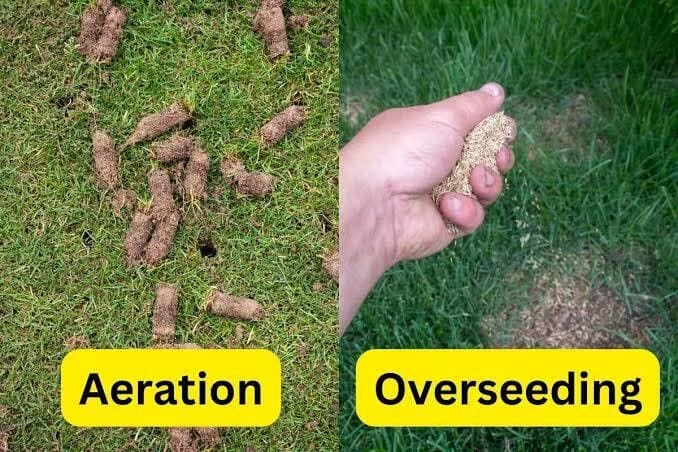
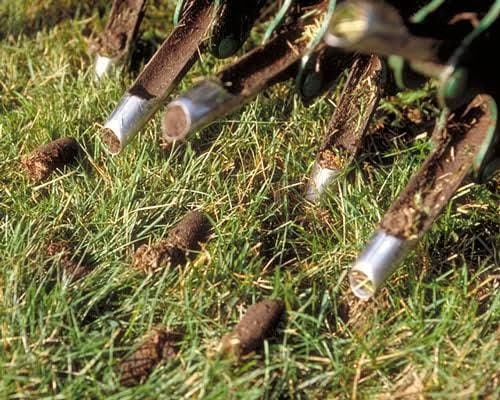
Core aeration uses hollow tines to remove small plugs of soil from the lawn. Instead of merely creating a temporary opening, the process physically removes a portion of the compacted soil.
Those openings can improve the movement of water and air into the root zone while giving roots additional space to develop.
University of Idaho recommends core cultivation for home lawns and notes that the removed soil cores can be left on the surface to break down naturally. The soil from the cores can return to the lawn while also helping microorganisms reach the thatch layer.
Core aeration can be particularly useful in areas affected by:
- Frequent walking
- Pet activity
- Recreational use
- Mowing equipment
- Compacted construction soil
- Poor water infiltration
- Heavy turf wear
The condition of the soil should determine whether aeration is appropriate rather than simply following an arbitrary calendar.
Why Overseeding Can Follow Aeration
Aeration and overseeding solve related but different problems.
Aeration improves the soil environment. Overseeding increases the amount of grass growing in the lawn.
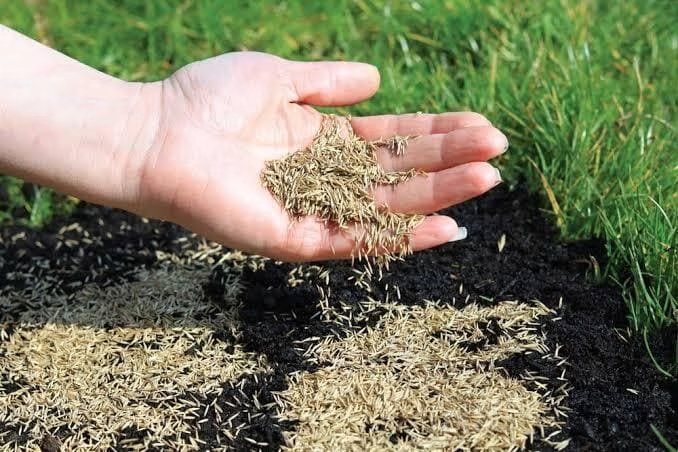
If a lawn has become thin, aeration cannot create new grass by itself. Overseeding introduces new seed into the existing turf so additional plants can establish in areas where density has declined.
Good seed-to-soil contact is important for successful establishment. Core aeration creates openings that can help seed reach the soil instead of remaining entirely on the surface.
Overseeding may be appropriate for:
- Thin turf
- Small bare patches
- Worn sections
- Areas recovering from seasonal stress
- Lawns with uneven grass density
- Existing turf that needs gradual renovation
It is not necessarily the right solution for a severely damaged lawn, a property dominated by undesirable vegetation, or a site with unresolved drainage problems. Those conditions should be addressed as part of the overall lawn assessment.
Choosing Grass Seed for a Hayden Lake Lawn
There is no single seed mixture that is ideal for every property.
University of Idaho identifies several cool-season grasses commonly used in Idaho lawns, including Kentucky bluegrass, perennial ryegrass, tall fescue, and fine fescues. Each has different characteristics and management requirements.
Seed selection can take into account:
- Amount of sunlight
- Existing grass species
- Expected foot traffic
- Soil conditions
- Desired appearance
- Maintenance requirements
- Water availability
- Local growing conditions
Matching the seed to the property is more useful than simply applying a generic blend to every lawn.
When to Aerate and Overseed in Hayden Lake
Timing is especially important when working with cool-season turf.
University of Idaho Extension identifies fall or spring as appropriate periods for core aeration, with fall preferred for Idaho home lawns. Summer aeration is discouraged because cool-season turf can already be under heat and moisture stress.
For new grass establishment, late summer and fall are generally favorable periods for cool-season turf because soil temperatures can support germination while cooler conditions reduce some of the stress associated with summer establishment.
The actual timing for a Hayden Lake lawn should still depend on current conditions. Extremely dry or saturated soil is not ideal for effective core aeration. University of Idaho recommends having adequate soil moisture for proper tine penetration.
What the Aeration and Overseeding Service Includes
Lawn Condition Review
Before treatment, the lawn should be evaluated for compaction, turf density, thatch, bare areas, drainage concerns, traffic patterns, and other conditions affecting growth.
This helps determine whether aeration and overseeding are appropriate or whether another service should come first.
Core Aeration
A core aerator removes plugs from the soil throughout the lawn. The openings provide additional pathways for water and air while reducing the effects of compacted soil.
The soil cores can remain on the surface and break down naturally. There is generally no need to remove them after aeration.
Overseeding
Where the existing turf is suitable for renovation, grass seed is applied across the lawn at an appropriate rate.
The goal is to improve turf density without unnecessarily replacing healthy existing grass.
Initial Establishment
Once seed is applied, the seeded areas need appropriate moisture. Keeping the upper soil layer consistently moist during germination is important, but irrigation should be adjusted according to weather and soil conditions rather than following one rigid schedule.
Caring for Newly Seeded Grass
After overseeding, the next several weeks are important for establishment.
During germination, the seedbed should remain adequately moist. Frequent, lighter irrigation is generally used at this stage, followed by a gradual transition toward deeper and less frequent watering as the seedlings develop.
Limit Traffic
New seedlings are vulnerable to being disturbed. Keep unnecessary foot and pet traffic away from newly seeded sections while the grass is establishing.
Mow Carefully
Do not rush the first mowing. New grass should have enough growth to tolerate cutting, and a sharp mower blade helps reduce unnecessary stress.
Monitor Moisture
Check the soil rather than relying only on a timer. Sun exposure, rainfall, temperature, soil type and seedling development all influence irrigation needs.
Be Careful With Weed Control
Some herbicides can interfere with newly seeded turf. In particular, pre-emergent products are designed to prevent seed germination, so their use needs to be carefully timed around overseeding. University of Idaho provides specific guidance on coordinating lawn renovation and weed control.
Aeration, Overseeding or Dethatching?
These services are sometimes grouped together, but each has a different purpose.
Core aeration targets compacted soil and improves conditions around the root zone.
Overseeding adds grass seed to increase turf density.
Dethatching addresses an excessive accumulation of organic material between the grass canopy and soil.
A lawn may need one service or several depending on its condition. University of Idaho notes that core aeration is also useful for managing thatch because soil cores left on the surface can help introduce microorganisms into the thatch layer.
The objective should be to correct the condition affecting the lawn rather than automatically performing every treatment.
Lawn Improvement for Hayden Lake Properties
Hayden Lake properties can vary in lawn exposure, soil, drainage, irrigation, grass type, and amount of daily traffic. A shaded lawn has different requirements from an open lawn, while a heavily used yard can develop compaction faster than an area that receives little traffic.
That is why a lawn-specific evaluation is more useful than assuming every property needs the same aeration frequency, seed mixture, or watering schedule.
Endurance Lawn Care provides lawn-care and turf-improvement services for Hayden Lake and surrounding North Idaho communities.
Frequently Asked Questions
How can I tell if my lawn is compacted?
Hard soil, poor water infiltration, thin turf in high-use areas, and difficulty pushing a screwdriver into the soil can all indicate possible compaction. These signs should be considered together with the overall lawn condition.
Does aeration automatically make a lawn thicker?
No. Aeration improves soil conditions but does not add grass plants. Overseeding is the part of the process that introduces additional seed where turf density needs improvement.
Is fall the best season for lawn aeration in Hayden Lake?
University of Idaho recommends fall as the preferred season for core aeration of Idaho home lawns, while spring is another suitable period when conditions are appropriate.
When should I overseed a cool-season lawn?
Late summer and fall are generally favorable periods for establishing cool-season turf in Idaho. The exact timing should account for soil temperature, weather and the condition of the existing lawn.
Should I remove the plugs after core aeration?
No. The soil cores can be left on the lawn to break down naturally. University of Idaho specifically recommends allowing them to decompose and return soil to the turf.
Can aeration solve standing-water problems?
Aeration can improve infiltration when compaction is part of the problem. However, standing water can also result from grading, drainage design, soil composition, irrigation problems or other site conditions. Aeration should not be presented as a complete drainage solution.
How much should I water after overseeding?
New seed needs consistent moisture during germination, but there is no universal number of watering sessions that works for every lawn. Soil type, weather, exposure and grass species should determine the irrigation approach.
How long does new grass take to germinate?
The timeframe varies according to grass species, soil temperature, moisture and other growing conditions. Rather than guaranteeing a specific number of days, monitor the seeded area regularly and maintain appropriate moisture during the germination period.
Can I overseed a lawn with a lot of weeds?
It depends on how much desirable turf remains and why the lawn has declined. A heavily weed-dominated lawn may require weed management or more extensive renovation before overseeding will produce the desired result.
How often should a lawn be aerated?
University of Idaho states that most home lawns should receive core cultivation at least annually, with fall generally preferred. Actual frequency can vary according to compaction, traffic, soil and lawn condition.
Schedule Aeration and Overseeding in Hayden Lake
If your Hayden Lake lawn has become thin, compacted, worn, or uneven, aeration and overseeding may be a practical way to improve its growing environment and restore turf density.
Endurance Lawn Care serves Hayden Lake and surrounding North Idaho communities with lawn improvement and property-care services.
Call 208-277-9721 to request an estimate for your lawn.