Aeration & Overseeding in State Line Idaho
Professional Lawn Care & Snow Plowing
Check Out Our Memberships!
A lawn can gradually lose density even when it receives regular mowing and irrigation. Repeated foot traffic, compacted soil, aging turf and worn areas can make it harder for grass to maintain strong growth. Aeration and overseeding can help address these conditions by opening the soil and introducing new grass seed where the existing turf has become thin.
For properties in State Line, Idaho, the right treatment depends on the current condition of the lawn, the existing grass varieties, soil characteristics, sunlight, irrigation and how heavily the property is used.
Start With the Condition of the Existing Turf
Aeration and overseeding are most useful when they are matched to an actual lawn problem.
A lawn may be a candidate for aeration when the soil has become hard or compacted, water has difficulty moving into the root zone, or heavily used sections have started to decline. Overseeding becomes more relevant when desirable grass is still present but the lawn has developed thin areas, worn sections or small bare spots.
These services are not intended to automatically replace every struggling lawn. In some situations, drainage, irrigation, soil quality, excessive thatch or an underlying turf problem needs to be addressed first.
Why Core Aeration Helps
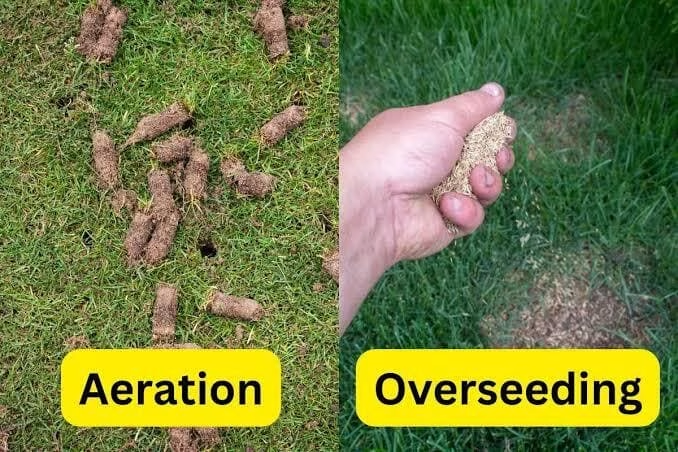
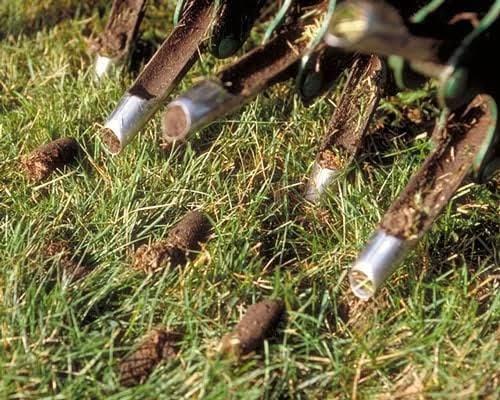
Core aeration uses hollow tines to remove small plugs of soil from the lawn. Those openings can improve the movement of air and water through compacted soil and create more room for roots to develop.
University of Idaho Extension identifies soil compaction and excessive thatch as common factors that can reduce lawn health and explains that core aeration can improve air movement, water infiltration and root growth.
The soil plugs created during aeration can remain on the lawn. As they break down, they return soil material to the surface and can contribute to thatch decomposition.
For best penetration, the ground should have adequate moisture without being excessively wet.
When Overseeding Makes Sense
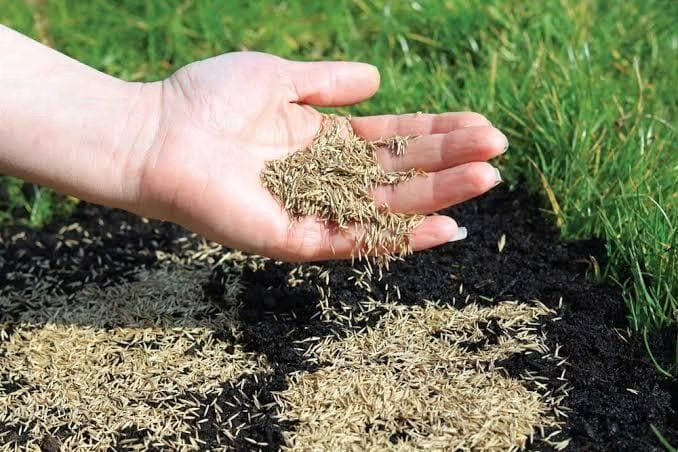
Overseeding adds new grass seed to an established lawn instead of removing the entire turf.
It can be useful when:
- Existing grass is noticeably thin
- High-traffic areas have worn down
- Small bare areas are developing
- The lawn has lost density over time
- Existing turf is still healthy enough to keep
- You want to improve coverage without a complete lawn replacement
Aeration and overseeding can complement one another. Aeration opens the soil, while overseeding introduces new plants into the existing turf.
However, overseeding is not always the right answer. If a lawn is dominated by undesirable grass, has severe drainage problems or has another significant underlying issue, additional seed alone may not solve the problem.
Choosing Grass Seed for State Line
There is no single grass mixture that should automatically be used on every property.
University of Idaho Extension lists Kentucky bluegrass, perennial ryegrass, tall fescue and fine fescue among the cool-season grasses commonly used in Idaho. Different varieties have different characteristics related to shade, traffic, drought, appearance and maintenance.
For an overseeding project, seed selection should consider the grass already growing on the property. A sunny lawn with frequent foot traffic may have different requirements from a shaded lawn with lighter use.
Using compatible varieties can also make the finished lawn look more consistent as the new grass develops.
The Right Season for Lawn Renovation
Timing is an important part of successful aeration and overseeding.
University of Idaho Extension identifies late summer and fall as the preferred period for establishing cool-season grass in Idaho. Soil temperatures are generally favorable for germination while new seedlings are not immediately exposed to the intense summer conditions they may face with spring establishment.
Core aeration is also generally preferred in fall. Spring can be suitable when conditions require it, while summer aeration is discouraged for cool-season turf because heat stress can slow recovery.
Rather than relying on one exact calendar date, scheduling should take the actual weather, soil moisture and condition of the lawn into account.
Signs Your State Line Lawn May Need Aeration
Hard Soil
If the soil is difficult to penetrate even when it has reasonable moisture, compaction may be limiting root development.
Poor Water Infiltration
Water that repeatedly runs off or remains on the surface may indicate a soil or drainage issue that deserves further evaluation.
Worn Traffic Areas
Walkways, play areas, pet routes and frequently used sections can become more compacted than the rest of the property.
Thin Turf
A lawn that gradually loses density may benefit from a closer look at soil conditions, irrigation, mowing practices, thatch and available growing space.
Excessive Thatch
A small amount of thatch is normal. University of Idaho identifies about one-half inch as a useful threshold for recognizing excessive accumulation. Core aeration can help manage thatch while also relieving compaction.
Our Approach to Aeration & Overseeding
Endurance Lawn Care can evaluate the lawn before determining which combination of services is appropriate.
Lawn Assessment
We look at turf density, soil condition, traffic patterns, irrigation coverage and areas that are struggling.
Core Aeration
Where compaction is limiting the lawn, hollow-tine aeration removes soil cores and creates openings through the turf.
Overseeding
If the existing lawn would benefit from additional density, compatible grass seed can be distributed across the property with attention to thin or worn sections.
Establishment Support
New seed needs reliable moisture and reasonable protection from traffic while it develops. Aftercare should be adjusted according to weather and the condition of the soil.
What to Expect After Overseeding
New seed needs moisture to begin germination. University of Idaho recommends light, frequent irrigation during the germination stage, with frequency adjusted as seedlings develop.
Avoid treating the entire lawn as though every section needs the same amount of water. Sun exposure, soil type, irrigation coverage and weather can all change how quickly the surface dries.
Once new grass becomes established, irrigation can gradually move toward a deeper and less frequent pattern.
Traffic should also be limited on newly seeded areas. Give the young grass time to establish before returning the lawn to heavy use.
When mowing resumes, use a sharp blade and avoid removing excessive grass at one time.
Aeration Is Not a Substitute for Every Lawn Repair
Aeration can be valuable, but it should not be presented as a cure for every turf problem.
For example, a lawn with significant standing water may need drainage or grading work. A lawn with poor irrigation coverage may need sprinkler adjustments. A lawn with excessive thatch may need additional thatch management. A severely damaged or weed-dominated lawn may require a more extensive renovation approach.
The University of Idaho’s Kootenai County lawn renovation guidance also distinguishes between different renovation situations, including lawns with heavy thatch, sparse turf and undesirable grass.
Identifying the underlying issue first helps prevent unnecessary treatments.
Aeration vs. Overseeding vs. Dethatching
Core aeration removes soil cores and addresses compaction and soil-air/water movement.
Overseeding adds new grass seed to an existing lawn to increase turf density.
Dethatching focuses on excessive organic material accumulated above the soil surface.
These services may be performed together when the lawn’s condition calls for them, but they do not perform the same job.
Maintaining a Thicker Lawn After Renovation
Aeration and overseeding are only one part of maintaining turf.
Regular mowing at an appropriate height, irrigation that matches seasonal conditions, balanced fertilization and attention to emerging lawn problems all contribute to long-term turf health.
A dense, actively growing lawn can also make it harder for weeds to occupy open spaces. The goal is therefore not simply to add seed once, but to create conditions that allow desirable grass to remain competitive.
State Line Lawn Care Considerations
Properties around State Line can vary considerably in exposure, soil condition, irrigation coverage and lawn use. Some yards may have open sunny areas, while others include shade from established landscaping or trees.
This is why the same aeration and overseeding schedule should not automatically be applied to every property.
A lawn that has been maintained consistently may need only targeted improvement in compacted areas. Another property may have widespread thinning and require a broader renovation plan.
Evaluating the actual lawn first allows the service to be matched to its condition.
Frequently Asked Questions
Does every lawn in State Line need annual aeration?
Not every lawn has identical needs, but University of Idaho Extension states that most home lawns should be core cultivated at least once a year. Soil type, traffic and turf condition can influence the appropriate schedule.
Is fall a good time to overseed?
Yes. Late summer and fall are generally the preferred periods for establishing cool-season grass in Idaho.
Can I overseed without aerating?
Yes, depending on the condition of the lawn. Aeration is particularly useful when compaction is part of the problem. If the soil is already in good condition, the lawn may not require both services.
Should the aeration plugs be removed?
Generally, no. University of Idaho recommends allowing the cores to break down on the lawn or working them back into the turf.
How long does new grass take to appear?
Germination time varies with grass species, soil temperature, moisture and weather. Some cool-season varieties establish faster than others, so there is no single timetable that applies to every overseeded lawn.
Can I walk on the lawn after overseeding?
It is better to minimize unnecessary traffic while new seedlings are establishing. Heavy use can disturb seed and young plants before they develop a stronger root system.
Does aeration solve standing water?
Not necessarily. Aeration can improve infiltration when soil compaction contributes to the problem, but persistent standing water can also result from grading, drainage or other site conditions.
Should dethatching be done before aeration?
If the lawn has excessive thatch, additional thatch management may be appropriate before or as part of the renovation process. The correct sequence depends on the lawn’s condition.
Aeration & Overseeding for State Line, Idaho Lawns
If your lawn has become thin, compacted or worn, aeration and overseeding can be considered as part of a broader lawn improvement plan. The right service depends on what is happening in the soil and existing turf.
Contact Endurance Lawn Care for an estimate and an evaluation of your State Line, Idaho lawn.